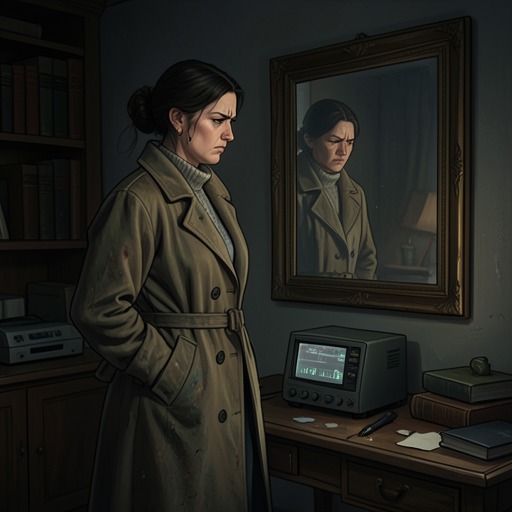
Ella Rodriguez—mother
Cinder & EllaElla Rodriguez’s relationship with her mother, Lucinda, is the novel’s central portrait of intimate attachment before bereavement: Lucinda is Ella’s best friend and safest companion, and their shared rituals give ordinary life its warmth. Her death in the crash that also leaves Ella gravely injured transforms that bond into an absence Ella encounters through the things they shared—especially their books and Lucinda’s yellow dress. The relationship persists not as a memory Ella can neatly put away, but as a source of comfort, grief, and recognition that she carries into a new family life.
Identity and Background
Ella’s childhood had already been shaped by her father’s departure. He left her and Lucinda after having an affair when Ella was eight, but Ella describes the loss as something her mother’s presence made bearable: she had grown up without a father, yet Lucinda was her best friend, and that felt sufficient. Their closeness was not presented as a substitute arrangement Ella resented; it was the foundation of a life she regarded as good.
The novel introduces this bond through a contrast between fairy-tale expectations and ordinary security. Ella has not, before the accident, experienced the defining tragedy that stories often give their heroines. Her mother’s companionship, their shared humor, and the sense that life was good enough form the emotional world the catastrophe will destroy. In retrospect, that opening makes Lucinda’s loss more than one devastating event: it ends the everyday relationship around which Ella had understood home.
Their Shared Life
Lucinda’s temperament helps explain the ease and intimacy between them. Ella remembers her as the most exuberant person she had ever known, someone who laughed constantly. The sound of that laughter seemed light enough to lift Ella with it; Lucinda’s response to life made happiness feel less like an achievement than the atmosphere of their home. Ella’s recollection makes this liveliness specific: she does not merely call her mother loving, but recalls the bodily, almost weightless impression her laugh left on her.
Their care for one another also appears in practical gestures. For Ella’s birthday, Lucinda surprises her with a four-day ski trip to Vermont, including a hot tub and massages after skiing. Ella’s first reaction is to ask whether they can afford such an indulgence. Lucinda answers by teasing her for sounding older than her age. The exchange shows a mother willing to make a celebration feel abundant and a daughter attentive to their limited means; affection travels through both the surprise and the joking negotiation around it.
Books were another durable language of their closeness. Lucinda gave Ella books for birthdays and Christmas, and sometimes simply because she felt like it, until gift-giving became a tradition. Ella built a library over years, traveling with her mother to author signings and book fairs throughout the Northeast and collecting signed volumes from favorite writers. At each signing, they had someone photograph them together with the author, then Ella tucked the picture inside the corresponding book. The collection was therefore also an archive of shared outings: its volumes held not only stories and signatures but evidence of the two of them together.
The Accident and the Final Separation
The accident interrupts an ordinary conversation between mother and daughter. During the drive from Boston toward Vermont, Lucinda tells Ella about the planned holiday and its comforts. Later, Ella is looking at her phone when a logging truck loses control on black ice and slides across the two-lane road into their path. She does not see it coming. Her remaining memory is of hearing her mother scream, being thrown against her seat belt, and the airbag bursting before her face. A brief, overwhelming pain gives way to nothing.
Ella wakes three weeks later in a Boston burn clinic, when doctors bring her out of an induced coma. She has second- and third-degree burns over seventy percent of her body. The account then gives the loss its starkest possible statement: Lucinda is dead. Ella’s injuries and her mother’s death are consequences of the same collision, but the narrative preserves the difference between them. Ella must live through severe bodily harm; Lucinda cannot return. The crash thus severs the relationship in the very moment that Ella’s surviving body becomes the site of a long aftermath.
Objects, Memory, and Grief
The books make bereavement newly immediate when Ella discovers that her collection has been given away. Her distress is not simply attachment to possessions. The library took years to assemble; its gifts marked an ongoing maternal tradition, and its photographs connected each book to a particular shared experience. When Ella learns that the books and pictures are gone, their disappearance feels like another removal of her mother. She breaks down, wishing she could shut off the pain. The loss of the collection repeats the structure of bereavement: something that held the past in material form is no longer available, and cannot be replaced by acquiring new objects.
Lucinda’s yellow cocktail dress offers a different, more intimate form of material remembrance. Ella finds it among the boxes her father packed. The dress had been an unusual extravagance for Lucinda: when Ella was about thirteen, Lucinda briefly dated a professional salsa dancer who loved taking her out dancing, and she spent beyond their usual limits to buy it. Ella remembers it as her mother’s most beautiful garment. Although it no longer smells like Lucinda, its shape and history make it precious; Ella had wept with relief when she discovered that it had survived among the packed belongings.
Before a formal dinner with the Colemans, Ella sees that her father, Jennifer, and the twins are dressed elegantly and doubts she will find anything in her wardrobe that belongs with them. Choosing Lucinda’s dress is therefore both a practical decision and an act of attachment. Ella presses the fabric to her face, admits that she needs her mother, and puts it on. The dress fits her closely; its thin straps leave her scars visible, a prospect that causes her physical distress. Yet she decides that the others will stare regardless and that she would rather take a part of Lucinda with her. She adds the pearl necklace Lucinda wore with the dress and arranges her hair as her mother did.
Continuing Presence
The mirror scene makes the dress more than a keepsake. Looking at herself, Ella can almost feel human again if she looks past the scars; she recognizes Lucinda in the reflection, with her own eyes marking the difference. That recognition is brief and complicated. It does not undo the accident or restore the mother who is missing, and Ella does not mistake resemblance for reunion. Instead, the inherited clothes, necklace, and hairstyle let her enter an intimidating family dinner accompanied by an aspect of the relationship she has lost.
Across these episodes, Lucinda remains present through practices and objects rather than through any suggestion that grief has been resolved. Their books preserve a history of shared attention, while the yellow dress enables Ella to carry her mother’s image into a new and uncomfortable social setting. The contrast between the irrecoverable mother and the surviving objects gives the relationship its continuing force: possessions can be lost, found, or worn, but none can replace Lucinda. Ella’s bond with her mother remains both a source of strength and the measure of what the accident took from her.